
PPC Management for eLearning and Online Schools
We Turn Google, Microsoft & Meta Ads Into Your Most Profitable Student Acquisition Channels
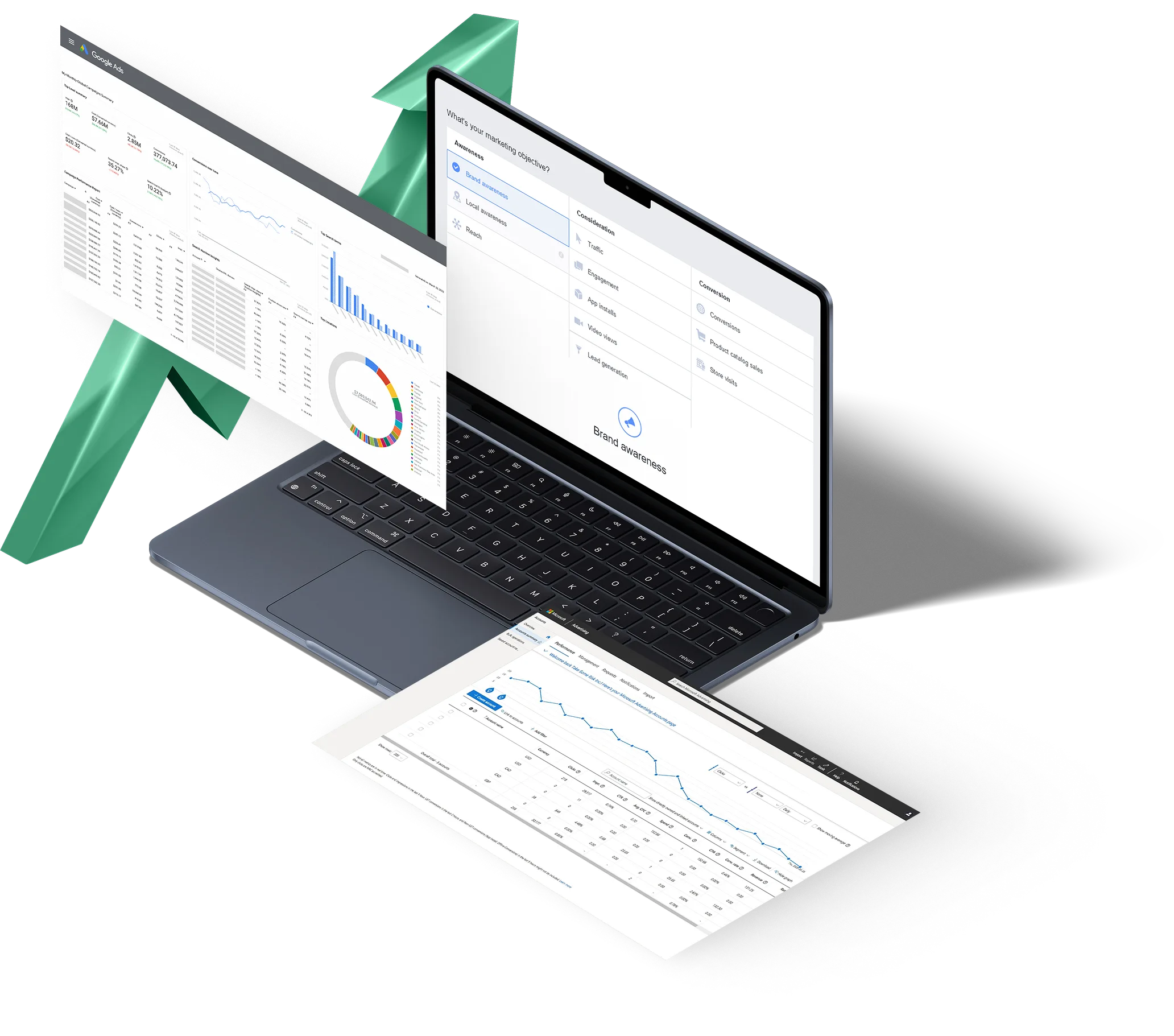
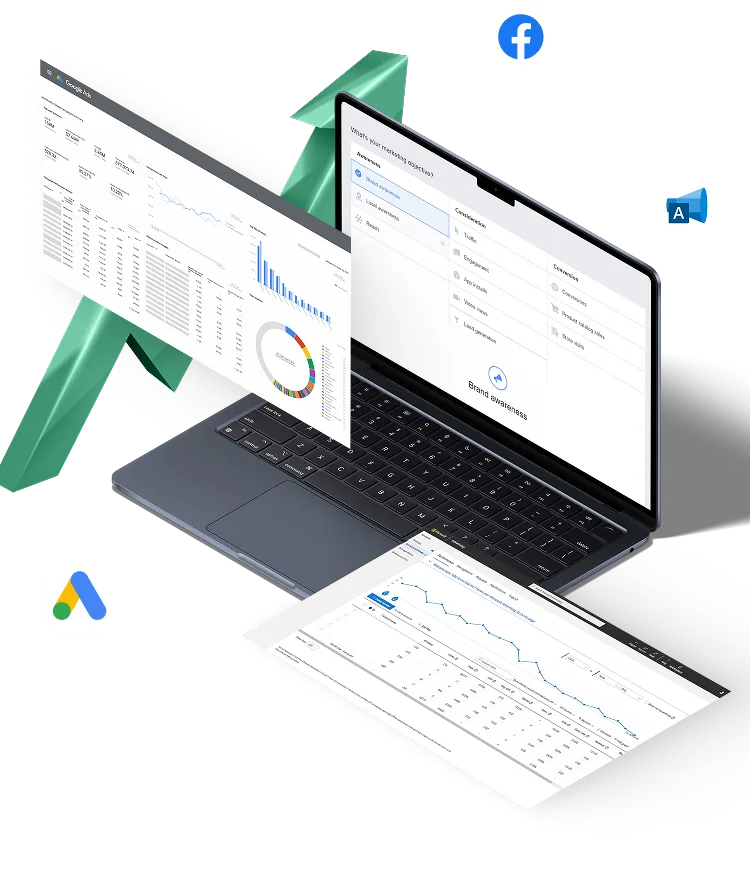
Our PPC ads management for eLearning is built to turn Google Ads, Microsoft Ads, and Meta Ads into your profit engine. We eliminate wasted spend, refine targeting, and drive consistent, measurable growth. If you’re ready to scale with clarity and confidence, let’s get to work.
Why Most eLearning PPC Campaigns Fail
Are you facing any of these common issues promoting your online school?

High ad costs eroding your margins?
- Ads aren’t converting into leads or enrollments?
- Paying too much for clicks without seeing returns?

Can’t Scale Your Ad Campaigns?
- Struggling to break past a plateau?
- Unsure how to optimize bids, targeting, or creative?

Competitors Outperform You?
- Losing market share to better-optimized ads?
- Can’t figure out why your competitors are winning?

No Clear PPC Strategy?
- Google Ads, Microsoft Ads, and Meta Ads feel overwhelming?
- No structured A/B testing or optimization process?
Our solution? A proven 3-Pillar Approach tailored to your school's goals, delivering expertise, transparency, and results you can trust.
Why Choose Us for PPC Ads Management for eLearning?
We build profitable, scalable PPC ads management for eLearning campaigns backed by data and strategy.
The 3 Pillar Method:
Account Structure
- We rebuild your ad setup so it’s clean, flexible, and algorithm-friendly.
- Optimize Google Ads, Meta, and Microsofts Ads for profit.
- Built for algorithmic bidding, not micro-management.

Data-Driven Optimization
- We set up conversion tracking to help you measure what matters.
- Connect all the dots to make decisions with data.
- Help you leverage analytics for data-driven growth.

Communication Strategy
- We help you say the right thing to the right people at the right time.
- We align your ads and landing pages around core value props.
- Create continuity from first click to enrollment.


Ready to scale your PPC campaigns?
How We Scale Your eLearning PPC Results and Lower Ad Costs

Eliminate Wasteful Ad Spend
We pinpoint high-cost, low-performing campaigns and reallocate budget to high-ROI opportunities.

Advanced Audience Targeting
Using AI-driven segmentation, we optimize your targeting across Google, Microsoft, and Meta Ads.
Full-Funnel Conversion Strategy
We design PPC campaigns that work throughout your customer journey—from awareness to purchase.
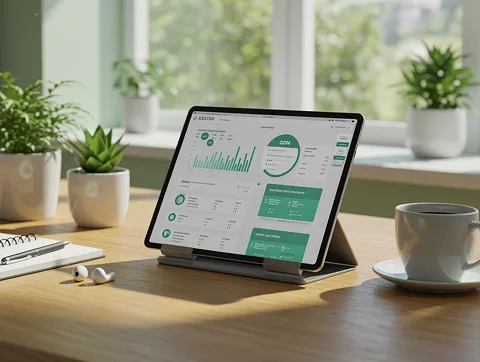
Real-Time Data & Reporting
Get transparent, real-time insights on your PPC performance, spend efficiency, and customer acquisition costs.

E-Learning PPC & Analytics Self-Assessment
Take This Quiz to Unlock Actionable Insights for Your Online School
Answer simple questions ale learn how to boost your enrolments in under 5 Minutes
What You Can Expect:
Let’s Build a Scalable PPC Strategy
Compare Our PPC Service vs. DIY Ad Management
Feature
DIY Setup
Our PPC Management
- Basic Setup, No Strategy
- Full-Funnel Strategy & Optimization
- Limited Insights
- AI-Driven & Manually Optimized
- Random Targeting
- Precision Audience Segmentation
- Prone to Errors
- Expert Tracking & Attribution
- No CRO Strategy
- Conversion Rate Optimization
- Often Wasted
- Optimized for Maximum ROI
Get Expert PPC Management That Pays for Itself
Trusted by High-Growth Companies & Brands Worldwide





What Our Clients Say

They genuinely care about getting the best outcome for clients and go above and beyond.
Matt Wood
Head of Digital, Karman Digital
Matt Wood
Head of Digital, Karman Digital
NNPARTNERS’ number one strength is their professionalism; they’re extremely responsive and very good at what they do.
Zev Asch
zevasch.com
Leo Vorontsov
Founder and CEO, Contractors Intelligence School
Leo Vorontsov
Nik and his team are excellent to work with, very talented, and very responsive!
Alex Wender
Martin Ochwat
Partner at Dundas Insurance
Let’s Take Your PPC Campaigns to the Next Level
Pricing & PPC Service Packages
Essential PPC Management
For businesses ready to optimize
- Google Ads & Microsoft Ads campaign management
- Advanced keyword research & bid optimization
- Custom audience segmentation & retargeting
- Basic landing page optimization

Advanced PPC Growth Strategy
For scaling businesses
- Full Google, Microsoft & Meta Ads management
- AI-powered bid strategy & audience insights
- A/B testing for landing pages & creatives
- CRM & sales funnel integration

Not sure what you need? Let’s discuss your goals.
PPC for eLearning Platforms FAQ
In the bustling digital classroom, where educational content is just a click away, eLearning platforms face the challenge of cutting through the noise. It’s not enough to build a great course; you need to connect with the students who need it the most. This is where Pay-Per-Click (PPC) advertising steps in, acting as your digital megaphone, directly addressing those actively searching for knowledge.
Think of PPC as placing your most captivating course brochure directly into the hands of someone walking past a library’s “New Courses” section. It’s about intent, precision, and immediate visibility. For eLearning, this translates into reaching motivated learners precisely when they’re looking to upskill, reskill, or delve into a new passion.
But launching a few ads and hoping for the best is like throwing spaghetti at a wall. A truly effective PPC strategy for an eLearning platform requires a deep understanding of your audience, meticulous keyword selection, a captivating ad copy, and relentless optimization. It’s a strategic chess game, not a lottery.
This guide will equip you with the insights and actionable strategies to not just run PPC campaigns but also to master them, ensuring that your courses attract the right students and deliver a strong return on your investment.
More questions? Contact Us Today!
Because marketing an online course is nothing like selling a product. Your prospective students research for weeks — sometimes months — before enrolling. They compare programs, read reviews, check accreditation, and weigh career outcomes. A generalist agency treats this like an ecommerce funnel and optimizes for clicks or form fills. That misses the point entirely.
An eLearning-specialist agency understands enrollment cycles, seasonal patterns (semester starts, back-to-school peaks), and the emotional weight of an education decision. We know that “career outcomes” and “flexibility” convert better than “enroll now.” We know that a nursing certificate program and a coding bootcamp need fundamentally different messaging strategies — even on the same platform.
At nn.partners, we’ve spent years building PPC campaigns specifically for online schools, course platforms, and bootcamps. Our 3-Pillar Method — conversion tracking, account structure, and communication strategy — is designed around the student journey from first click to enrollment. One client saw a 300% increase in enrollments after we restructured their campaigns around how students actually make decisions, not how ecommerce buyers do.
If you’re tired of explaining enrollment cycles to your agency, you shouldn’t have to. Learn how our 3-Pillar Method works.
This is where most agencies fall short — and where we start. The student journey isn’t a single click-to-conversion event. A prospective student might click your ad, browse three programs, download a brochure, come back two weeks later via organic search, attend a webinar, and then apply. If your tracking only captures the last click, you’re crediting the wrong channel and making bad budget decisions.
We set up full-funnel attribution using GA4, Google Tag Manager, and Enhanced Conversions to track every meaningful touchpoint: information requests, brochure downloads, application starts, application completions, and actual enrollments. For schools with CRM systems, we connect ad click data to enrollment outcomes so you can see exactly which campaigns, keywords, and ad groups produce students — not just leads.
This is Pillar 1 of our methodology, and it changes everything. When you can see that your nursing program generates a 4:1 ROAS while your business certificate program breaks even, you make completely different budget decisions than when you’re just looking at cost per lead.
Our analytics service includes the full tracking setup — GTM, GA4, Enhanced Conversions, and a custom Looker Studio dashboard showing enrollment attribution by program, campaign, and platform.
For established eLearning businesses with existing campaigns, we typically deliver measurable improvement within the first quarter. Here’s what that looks like with real numbers from our clients:
One online school saw a 300% increase in student enrollments after we restructured their campaigns around program-specific intent keywords and fixed their conversion tracking — they’d been optimizing toward page views, not actual applications.
An online nursing certificate platform scaled enrollment by 200% in 8 months after we rebuilt their account structure to separate programs by funnel stage and student intent level.
Another eLearning partner achieved a 4:1 ROAS on their construction classes program by aligning ad messaging with the specific career outcomes students were searching for — not generic “learn online” copy.
Across our education clients, we consistently see 20-30% CPL reductions in the first 60 days, primarily from fixing tracking (so Smart Bidding optimizes toward real enrollments) and eliminating wasted spend on non-converting search terms.
The timeline: Month 1 is audit, tracking, and restructuring. Month 2 is optimization with clean data. Month 3 is where enrollment growth becomes consistent and scalable. And with our 30-day implementation-first model, you see the foundational work before your first payment.
Our eLearning PPC management starts at $3,000/month per ad source (Google, Meta, or Microsoft). Most of our education clients run on two platforms — typically Google Ads for intent-based search and Meta for audience-based prospecting — which means a typical engagement is $6,000/month for full-funnel coverage.
For that investment, you get campaign management, bid optimization, enrollment tracking setup, and a custom Looker Studio dashboard showing per-program performance. That’s PPC management and analytics combined — most agencies charge separately for tracking and reporting, if they offer it at all.
To put it in perspective: at an average CPC of around $5 in the eLearning space, high-volume campaigns burn through budget fast when targeting is off. If you’re spending $50K+/month on ads, even a 10% improvement in efficiency pays for management several times over. Our clients typically see 20-30% waste reduction in the first month alone.
Our pricing model is straightforward — no setup fees, no long-term contracts. We start with a complimentary audit, then implement everything before you pay. You get 30 days of hands-on work — tracking fixes, account restructuring, dashboard setup — before your first invoice. If the results don’t speak for themselves, you walk away having learned exactly where your campaigns stand.
We work with established eLearning businesses that have proven programs and real enrollment goals. That includes online schools, coding bootcamps, trade certification programs (construction, healthcare, nursing), professional development platforms, career advancement courses, and driver’s education schools.
The common thread: our best-fit clients are spending $30K+ per month on ads, have clearly defined programs, and need to hit specific enrollment or revenue targets. They’ve typically tried working with generalist agencies and found that those agencies don’t understand the nuance of marketing education — the long decision cycles, the emotional weight of the commitment, the seasonal patterns, the accreditation requirements that shape what you can and can’t say in ad copy.
Where we’re not the right fit: brand-new course creators still validating their offer, or platforms with very low price points (under $100/course) where unit economics don’t support paid acquisition at scale. For those businesses, organic content and SEO are usually a better starting investment.
If you’re an established school with real programs and a real budget, and you’re frustrated that your current marketing doesn’t reflect the quality of your education — that’s exactly who we built this agency to serve. Schedule a discovery call and we’ll tell you honestly whether we’re the right match.
This is the most common problem we see in education PPC — and it’s almost never about the ads themselves. The disconnect happens between the click and the enrollment, and there are three usual causes.
First, tracking gaps. If you’re only measuring form submissions or “info request” completions, you’re missing half the picture. Students who click your ad often visit multiple pages, leave, and return days later. Without proper cross-session tracking and Enhanced Conversions, your bidding algorithm has no idea which clicks eventually become students. It optimizes for the wrong people.
Second, message mismatch. Your ad promises career transformation, but your landing page leads with course curriculum and credit hours. Students care about outcomes — salary increases, career changes, job placement rates, flexibility. If your landing page doesn’t address these within the first scroll, they bounce.
Third, funnel friction. Enrollment in an online program is a high-commitment decision. If your only conversion path is “Apply Now,” you’re asking cold traffic to make a major life decision on the first visit. You need intermediate steps — program guides, webinar registrations, chat with an advisor — that capture intent while respecting the decision timeline.
Our 3-Pillar Method addresses all three systematically: fix tracking, restructure campaigns, then align messaging to the student journey.
With an average CPC around $5 in the eLearning space, clicks may seem affordable — but they add up fast at scale. If you’re running high-volume campaigns across multiple programs, even small inefficiencies compound into thousands in wasted spend each month. But cost per enrollment isn’t really about lowering CPCs — it’s about making each click more likely to produce a student.
Start with your conversion tracking. Most eLearning accounts we audit are optimizing toward “info request” submissions, not actual enrollments. The problem: a lead that downloads a brochure and never responds costs the same as one that enrolls in a $10,000 program. When you feed enrollment data back to Google’s algorithm — not just lead form completions — it learns to find people who actually commit, not just people who browse.
Next, restructure by program and intent. “Online nursing degree” and “nursing certificate programs” attract very different students with very different lifetime values. Lumping them into one campaign means your bidding treats them equally. Separate them, set program-specific targets, and let the algorithm optimize each one independently.
We reduced CPL by 30% for an online school in the first 60 days — primarily by implementing proper enrollment tracking and restructuring around program profitability. The ad spend didn’t change. The system just got smarter about where to spend it.
Want to see where your enrollment tracking stands? Our complimentary audit will show you exactly what’s being measured — and what’s being missed.
Enrollment doesn’t happen evenly throughout the year — and your ad strategy shouldn’t either. Most online schools see predictable surges around semester starts (January, May, August/September) and dips in summer and late fall. The mistake most agencies make is running flat budgets year-round, wasting spend during low-intent periods and under-investing when demand peaks.
The strategic approach: build your campaigns around enrollment windows. Increase budget 4-6 weeks before each enrollment deadline, when prospective students shift from browsing to deciding. Scale back — but don’t pause — during off-peak periods. Those quieter months are when students are in early research mode, so your messaging should shift from “enroll now” to “explore programs” and “download the guide.”
Seasonal campaigns also need separate budget and bidding strategies. Your September enrollment push and your January campaign serve different audiences at different commitment levels. Treating them as one continuous campaign muddies the data and prevents the algorithm from learning what works for each cycle.
We build enrollment calendars into every eLearning account we manage — mapping budget allocation, messaging shifts, and bidding strategies to your specific start dates. This way, you’re not reacting to enrollment peaks. You’re engineering them. It’s one of the reasons our education clients consistently outperform their own year-over-year enrollment targets.
Both — but for different reasons and at different stages of the student journey.
Google Ads captures demand. When someone searches “online nursing degree accredited” or “best coding bootcamp 2026,” they’re actively looking. These are high-intent clicks that convert at the highest rates. Google should be your primary channel for students who already know they want to enroll somewhere — your job is to make sure they choose you.
Meta Ads (Facebook and Instagram) creates demand. Most prospective students aren’t actively searching — they’re scrolling. Meta lets you target people by life stage, interests, and behaviors: career changers in their 30s, parents looking to upskill, professionals browsing education content. These campaigns build your pipeline by reaching students before they start their Google search.
The key is connecting both platforms with unified tracking. A student might see your Meta ad on Monday, Google your school name on Wednesday, and apply on Friday. Without cross-platform attribution, you’d credit Google and undervalue Meta — potentially cutting the very campaigns that filled your top of funnel.
At nn.partners, most of our eLearning clients run both Google and Meta, with Microsoft Ads added for programs where Bing’s older, higher-income demographic aligns with the student profile. We manage all three under one unified analytics dashboard so you see the complete picture, not siloed platform reports.
You don’t try to outspend them — you outposition them. Large institutions bid on broad terms like “online degree” and “best online courses” with massive budgets you can’t match. But they also have massive inefficiency — bloated accounts, slow decision-making, and generic messaging that tries to promote hundreds of programs at once.
Your advantage as a specialized school is specificity. Instead of competing for “online education,” own the long-tail: “online construction management certification,” “accredited nursing assistant program online,” “coding bootcamp for career changers over 30.” These keywords have lower competition, higher intent, and attract students who know exactly what they want — your ideal enrollee.
Second, outmessage them. Universities default to brand prestige and campus photos. Bootcamps lean on “get hired in 12 weeks” promises. Neither speaks to the specific anxieties of your student: Will this credential be recognized by employers? Can I do this while working full-time? What’s the actual job placement rate?
Address those questions directly in your ad copy and landing pages — specific outcomes, specific flexibility, specific proof. A well-structured campaign targeting long-tail keywords with specific messaging can generate a 4:1 ROAS even in competitive education verticals.
Our clients consistently outperform larger competitors not by outbidding them, but by running tighter, more relevant campaigns that convert at higher rates. That’s the difference between spending more and spending smarter.

Nik Vdovenko
founder at nn.partners
Nik Vdovenko
founder at nn.partners
Turn Google, Bing, and Facebook Ads Into a Profit Engine for Your School
- Slash high student acquisition costs through data-driven optimizations, so every ad dollar fuels real enrollments.
- Leverage our proven 3-Pillar Approach (Conversion Tracking, Account Structure, and Communication Strategy) to build efficient campaigns tailored to your school's goals.
- Achieve consistent growth, turning sporadic sign-ups into steady, scalable revenue for your courses and programs.
Book Your Call Today & Start Growing!
Blog
Unlock Enrollment Growth: Your Guide to Education PPC Agencies
Navigating Paid Advertising for Schools, Colleges, & Universities Quick Summary / Key Takeaways Education PPC agencies offer specialized expertise, understanding unique student recruitment cycles, compliance,

Master PPC: Drive Student Enrollment with Targeted Ads
Unlock Growth: Expert Strategies for Higher Education’s Digital Recruitment Quick Summary / Key Takeaways Precision targeting is paramount: Leverage demographic, geographic, and interest-based targeting
Mastering Google Search Ads for Online Schools
Quick Summary / Key Takeaways Introduction For nearly a decade, I’ve been deep in the world of online advertising with a focus on Google Ads,