nn.partners

Top 5 Trending eLearning Ad Campaigns in 2025

Untitled1
I hope you enjoy reading this blog post. If you want my team to do ads and analytics for you, schedule your call here
Author: Nik Vdovenko | Founder of nn.partners

Table of Contents

Online education continues to surge in popularity, with e-learning providers in the USA harnessing innovative advertising campaigns to capture learner interest. In 2025, the industry is marked by fierce competition, where platforms leverage short-form videos, AI, and targeted social media ads to drive enrollments.

This article explores five standout e-learning advertising campaigns dominating the USA, drawn from trends in early 2025. These examples offer inspiration for crafting effective marketing strategies for online schools and learning platforms.

Why E-Learning Advertising Matters in 2025

The U.S. e-learning market is projected to grow significantly, fueled by rising demand for flexible, skill-based learning. According to industry reports, platforms are investing heavily in digital ads, with educational services spending over $1.5 billion on advertising in 2023 alone, a trend continuing upward. Key drivers include technological advancements like AI, plus a focus on career outcomes. Successful campaigns not only boost visibility but also build trust, emphasizing personalized experiences and real-world benefits.

In 2025, trends highlight short-form videos dominance on TikTok, Meta platform, and YouTube (Part of Google), AI-driven targeting, and community-building through user-generated content.

Top 5 Examples of E-Learning Advertising Campaigns

1. Duolingo: TikTok Viral Campaign on Mandarin Learning

@duolingo

216% increase in baddies learning mandarin 😼 #duolingo #tiktokban

♬ who is this DIVA sound – 6um6o

Duolingo kicked off 2025 with a timely TikTok series amid discussions of a potential TikTok ban in the USA. The campaign features their mascot, Duo the owl, in humorous short videos teaching Mandarin phrases, tying into the shift toward alternatives like RedNote. Launched in early 2025, it uses trending hashtags and user challenges to engage Gen Z, resulting in high engagement rates and increased app downloads.

This approach showcases how e-learning platforms can capitalize on current events for viral reach, blending fun with practical language skills.

2. MasterClass: Targeted Video Ads Featuring Experts

MasterClass continues to captivate audiences in 2025 with targeted video ads that showcase celebrity instructors like Gordon Ramsay, Serena Williams, and Neil Gaiman delivering snippets of their exclusive courses.
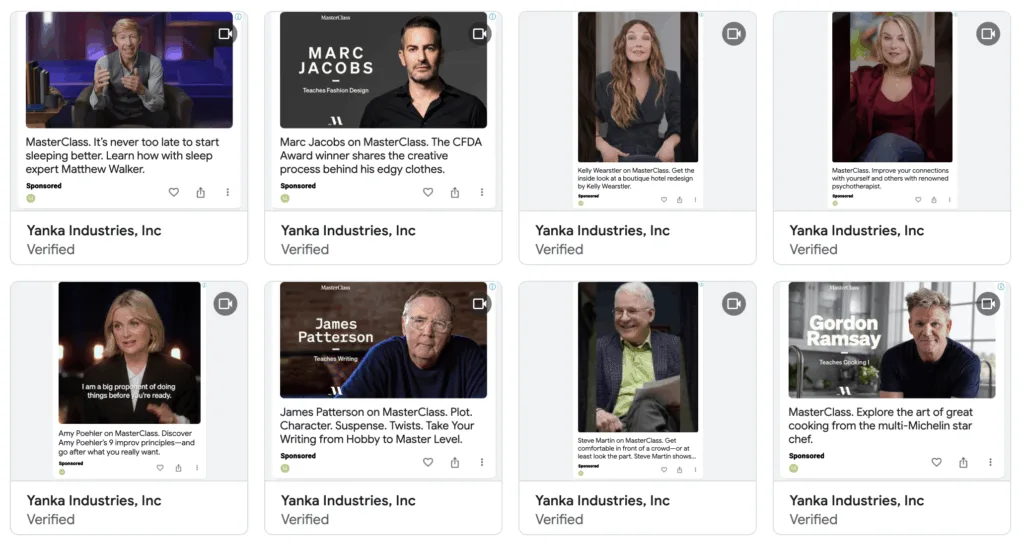
These ads, often running on YouTube, TV, and social media, emphasize the tagline “Learn from the best” and highlight premium, on-demand learning for creative and professional skills. Launched with refreshed creatives in early 2025, the campaign targets aspiring professionals and hobbyists, driving subscriptions through compelling storytelling and high-production value.

It’s a prime example of leveraging star power for e-learning promotion, boosting engagement in a competitive market where users seek inspirational, expert-led content. For examples, see their ad spots on iSpot.tvispot.tv, promotional videos on YouTube, and insights on creating effective commercialsmasterclass.com.

3. Coursera: Personalized Google Ads Campaigns
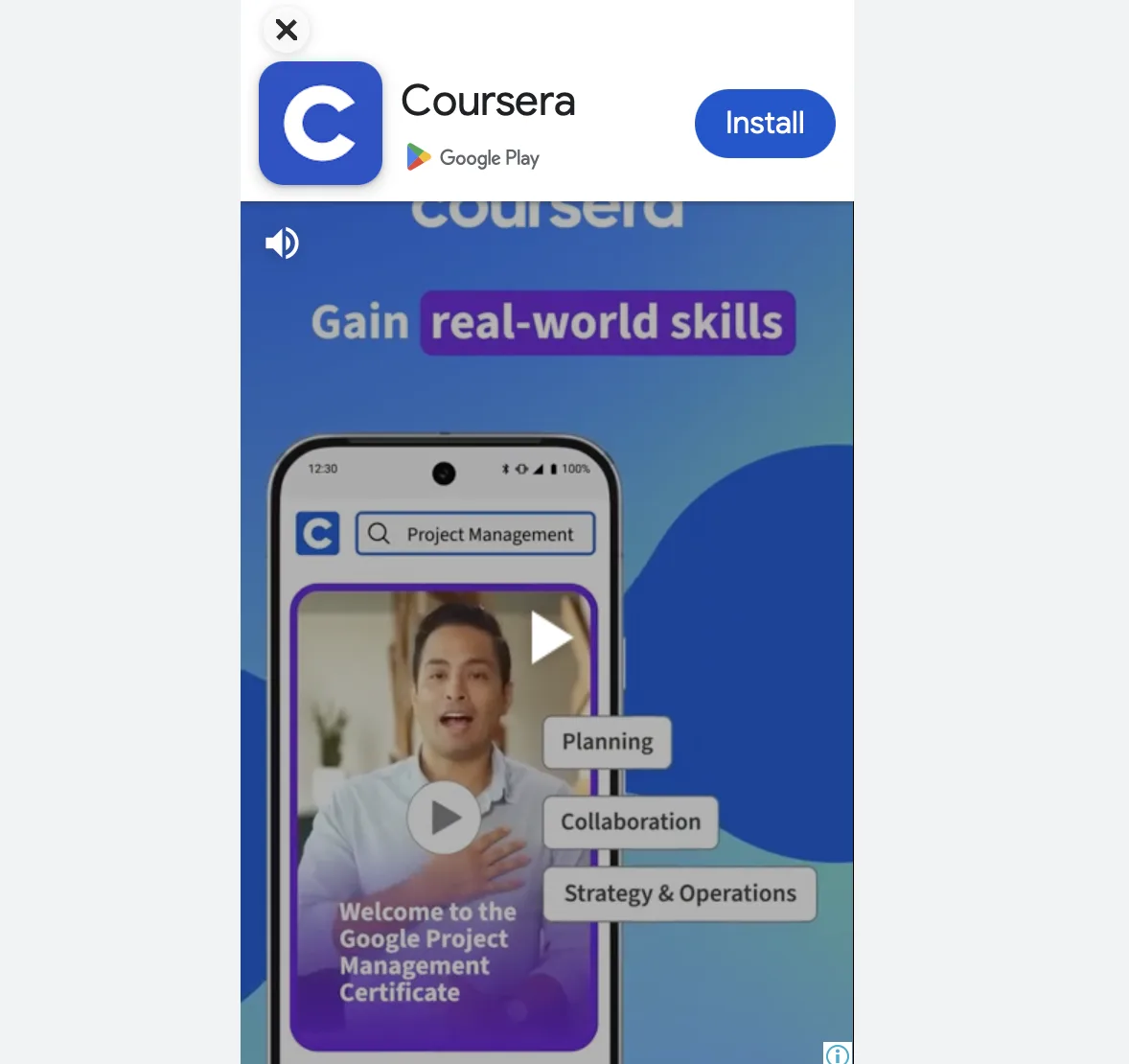
Coursera leverages hyper-targeted Google Ads in 2025, with headlines like “Learn Project Management. Explore professional lessons designed by Google”, often featuring free module trials through mobile app. 

This campaign focuses on career certifications and has driven enrollment spikes. It exemplifies data-driven personalization, a top trend boosting conversion rates in e-learning.

4. LinkedIn Learning: Professional Growth Ads on LinkedIn

LinkedIn Learning targets career professionals with 2025 ads on its parent platform, that adapts course suggestions based on user profiles.

Campaigns include sponsored posts and videos on skills like project management or Google ads training, tailored to user job titles. Evolving from 2024 initiatives, it uses LinkedIn’s B2B network for precise targeting, encouraging free trials. This strategy aligns with the rise of micro-credentials, appealing to those seeking quick upskilling in a competitive job market.

5. Udemy: Personalized Email and Social Media Discount Campaigns

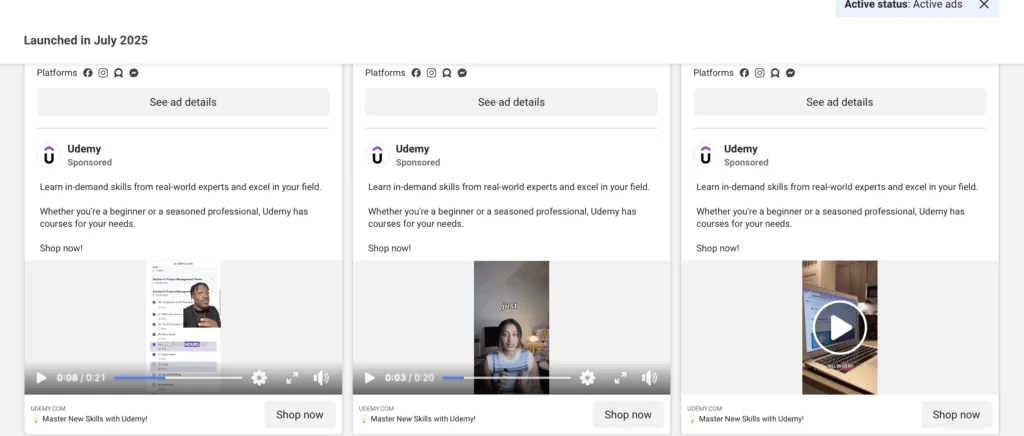
Udemy’s 2025 email blasts use AI to offer tailored discounts, such as “$9.99 Python courses” for programming seekers.

Paired with Reels showing quick skill demos, the campaign, promotes real outcomes and user testimonials. It drives high conversions by focusing on affordability and immediate value, tapping into the microlearning trend where short, on-demand content boosts retention.
Key Trends in E-Learning Advertising for 2025

These campaigns reflect broader shifts:

  • Short-Form Video Dominance: Platforms like Meta and YouTube lead, with 21% of marketers citing highest ROI from this format.
  • AI Personalization: Tools analyze user data for custom ads, enhancing engagement and predicting behaviors.
  • Career-Focused Messaging: Emphasis on certifications and outcomes, as 80% of learners seek job advancement.
  • Mobile Optimization: With 71% preferring mobile, campaigns prioritize seamless app experiences.
  • User-Generated Content: Encourages authenticity, building community and trust.

How to Create a Successful eLearning Campaign

  1. Leverage Social Media: Use Meta and YouTube for visual content targeting professionals.
  2. Implement AI Targeting: Personalize ads via tools like Google Analytics for better ROI.
  3. Focus on Benefits: Highlight career gains, free trials, and flexibility to address learner pain points.
  4. Add Interactivity: Incorporate quizzes or previews to boost engagement.
  5. Measure and Optimize: Track metrics like conversions with A/B testing and refine based on data.

By adopting these strategies, e-learning providers can thrive in 2025’s competitive landscape.


At nn.partners, we specialize in helping online schools bring clarity, control, and ROI to their ads and analytics. Fix your tracking, structure your accounts, and align messaging to unlock predictable enrollment growth.
Learn how we can help you scale confidently.

Untitled1

Nik Vdovenko

Hi, I’m Nik Vdovenko—founder and CEO at nn.partners. I’m on a mission to match great businesses with great marketing and analytics. I work with an awesome, globally-distributed team from my base in Portugal, and together, we focus on making sure every dollar you spend on Google, Meta, and Microsoft ads drives more sales and profit for your business. Follow me for industry insights, practical guides, and proven strategies to help you grow your business, save time, and get a lasting competitive edge in the digital marketplace.

You might be interested

Trending eLearning Advertising Campaigns 2025 FAQ

The eLearning ad landscape in 2025 feels louder, faster, and more competitive than ever. Short-form video is everywhere, AI is rewriting how platforms target learners, and major players like Duolingo, MasterClass, and Coursera are setting the bar with bold, high-impact campaigns. For online schools, this can be both inspiring and overwhelming.
That’s why this FAQ exists.

To cut through the noise, break down what these trends actually mean for your school, and help you understand how to apply the same principles without needing Hollywood-level budgets.
Whether you’re wondering how to choose the right platform, how to stand out with creative, or how to measure what’s working, these questions will give you the clarity you need to build campaigns that attract the right learners and turn attention into enrollments.

Let’s dive in and make 2025 the year your advertising works with you, not against you.

The biggest shift is how fast the ad landscape is moving toward personalization, short-form video, and AI-driven targeting. TikTok-style creatives now dominate Meta and YouTube. Learners expect quick, visual proof of value, not long explanations. Platforms like Coursera, MasterClass, and Duolingo are leading the way by blending storytelling with hyper-targeted delivery.

AI is also reshaping everything behind the scenes. Platforms use behavior signals to show different creatives to different learners, making ads feel custom. Career outcomes, micro-credentials, and job-readiness messaging outperform generic “learn online” pitches by a wide margin.

In short, 2025 is less about big budgets and more about relevance, speed, and personalization.

Real Results: At nn.partners, clients who shifted to personalized ads and AI-powered audience refinement saw up to a 30 percent lift in qualified leads and a measurable increase in enrollment velocity within one quarter.

Takeaway: To stay competitive in 2025, embrace quick, high-impact video, personalize aggressively, and speak directly to career outcomes. The schools that adapt will grow; the ones that don’t will fade into the noise.

Google Search ads remain the strongest, most reliable channel for most online schools in 2025. When someone types “cybersecurity certification online” or “best real estate exam prep,” they are signaling intent. They already want a solution. That makes Google Search the workhorse of enrollment-focused advertising.

But intent alone doesn’t build demand. Platforms like TikTok, Meta, and YouTube thrive earlier in the journey. They introduce the idea of learning, spark curiosity, or highlight a career transformation before a student even knows what to search for. The psychology is different. Google captures intent. TikTok, Meta, and YouTube create it.

When schools combine these channels well, awareness platforms warm up large audiences and Google captures them when they start researching. It becomes a loop that compounds over time.

Real Results: One of our certification school clients saw their strongest year on record by pairing Meta short-form demand generation with tightly structured Google Search campaigns.

Takeaway: Prioritize data privacy and transparency in your AI usage to build trust and ethical credibility in your eLearning campaigns.

Short-form videos work because they meet students where their attention already lives. TikTok, Instagram Reels, YouTube Shorts, even short Meta placements reward content that hooks fast, shows transformation clearly, and feels human rather than “produced.” For online schools, these videos do three powerful things:

They simplify complex ideas into quick, visual wins.

They showcase real outcomes like “before and after” career stories.

They build trust by showing instructors, students, and real classroom energy.

Instead of asking someone to read a long landing page, short videos show the result in seconds. That makes them ideal for top-of-funnel demand creation and for nudging hesitant prospects closer to enrollment.

Real Results: eLearning platforms with active communities reported up to 20% higher learner completion rates and a 25% increase in referral enrollments within 12 months.

Takeaway: Integrate community-building elements into your ad strategy to boost engagement, trust, and organic growth for your eLearning offerings.

Modern ad platforms use AI to predict who is most likely to enroll, what message they’ll respond to, and when they’re ready to take action. Instead of guessing, AI analyzes patterns across thousands of signals such as past behavior, search intent, scroll activity, and even micro-engagements inside the funnel.

For online schools, this means your ads can automatically adapt to student goals, skill levels, and career interests. AI can personalize headlines, recommend course paths, and segment audiences far more precisely than manual targeting ever could.

In short, AI makes your ads feel one-to-one even when you’re advertising at scale.

Real Results: We’ve seen AI-driven targeting lift enrollment conversion rates by more than 25 percent for several certification programs. One California school saw its best year ever after we paired proper tracking with AI audience signals in Google Ads and Meta. Once the platforms understood who the ideal student was, performance surged.

Takeaway: AI is not the magic trick—your data is. Feed platforms clean, meaningful signals and AI becomes a force multiplier, delivering the right message to the right learner at the perfect moment.

Most online schools don’t fail because of bad ads. They fail because the foundations behind those ads are weak. The biggest mistakes we keep seeing include:

  • Lack of meaningful tracking. Schools send clicks into a black box, so platforms never learn what a “good student” looks like. This leads to high CAC and unstable results.
  • Overcomplicated account structures. Too many campaigns, too many ad sets, and no consolidation. This prevents algorithms from gathering enough data to optimize.
  • Generic messaging. Schools talk about course features instead of student outcomes, career transitions, or the emotional reasons people enroll.
  • Ignoring branded search. Competitors capture ready-to-convert students simply because the school didn’t protect its own name in Google Ads.
  • Chasing trends without fundamentals. Short-form videos and AI tools help, but they cannot fix broken tracking or messy strategy.

These issues create a pattern: rising spend, falling enrollments, and no clarity on why.

Real Results:  We’ve helped schools turn performance around simply by fixing these three core mistakes: tracking, structure, and communication. One major certification provider had their strongest 18-month run in company history after resolving these fundamentals, without increasing their ad budget.

Takeaway: You don’t need more tactics. You need a stable system. Get your tracking right, simplify your structure, and sharpen your message—and your ad performance will change fast.