nn.partners

Running PPC for Online Schools: 3 Keys to Success

Nik Vdovenko founder at nn.partners
I hope you enjoy reading this blog post. If you want my team to do ads and analytics for you, schedule your call here
Author: Nik Vdovenko | Founder of nn.partners

Table of Contents

Why Your Ads Might Not Be Working (And How to Fix Them)

Imagine you’re running an online school, pumped about your awesome courses. You launch PPC for online schools—those pay-per-click ads like Google Ads for schools or Meta/Facebook Ads—to bring in tons of new students. But instead of a flood of sign-ups, you’re stuck with a trickle of clicks or, worse, your budget vanishes with no results.

Super annoying, right? If your PPC for schools feels like a rollercoaster with wild ups and downs or just flatlines, you’re not alone. Plenty of online school owners face this, wasting money on clicks that don’t turn into enrollments or drowning in data that makes no sense.

There are a million ways to do PPC, but honestly, you only need three big things to nail it: conversion tracking, ad account structure, and communication strategy.

In this article, I’ll break it down like we’re chatting over coffee. No fancy words—just straightforward, tactical tips to help you, the school owner, run ads that actually make money. Let’s jump in and make your campaigns awesome.

The Usual Problems: What’s Going Wrong with PPC for Online Schools

Before we fix things, let’s talk about why ads flop for so many online teachers. The e-learning world is huge—it’s gonna be worth like $400 billion soon—but bad PPC can suck up your budget without helping. From our chats and audits, here’s what we see a lot:

  • Up-and-Down Results: Your ads rock one week but bomb the next. Usually because you’re not tracking stuff right or the ad systems keep changing.
  • Losing Money with No Payoff: You get visitors to your site, but they don’t buy courses. This happens when your ad setup confuses the system or your messages don’t grab people.
  • Too Much Data, No Real Help: Everyone says “use data!” but then you stare at a spreadsheet with tens of columns an thousands of rows without knowing what really counts—like actual student sign-ups. It leaves you stuck and stressed.

These aren’t random bad luck; they’re from missing the basics. But don’t worry—with these three pillars, you can build ads that work every time.

Pillar 1: Conversion Tracking—Track What Really Counts

Okay, data is a big deal in ads, right? When we check people’s ad accounts, they all say, “Yeah, we use data.” But often, it’s not set up right.

What does “using data” even mean?

It’s super simple: Just measure the stuff that matters to your school, like when someone actually buys a course.

Conversion tracking tells ad platforms—like Google Ads or Facebook—when a win happens, like a sign-up or purchase. Without it, the ads algorithm can’t learn and get better. For example, if you want more course sales, check: Are you tracking that in your sign-up system and on the ad platforms? Do the numbers make sense?

Go to the conversions section in your ad account.
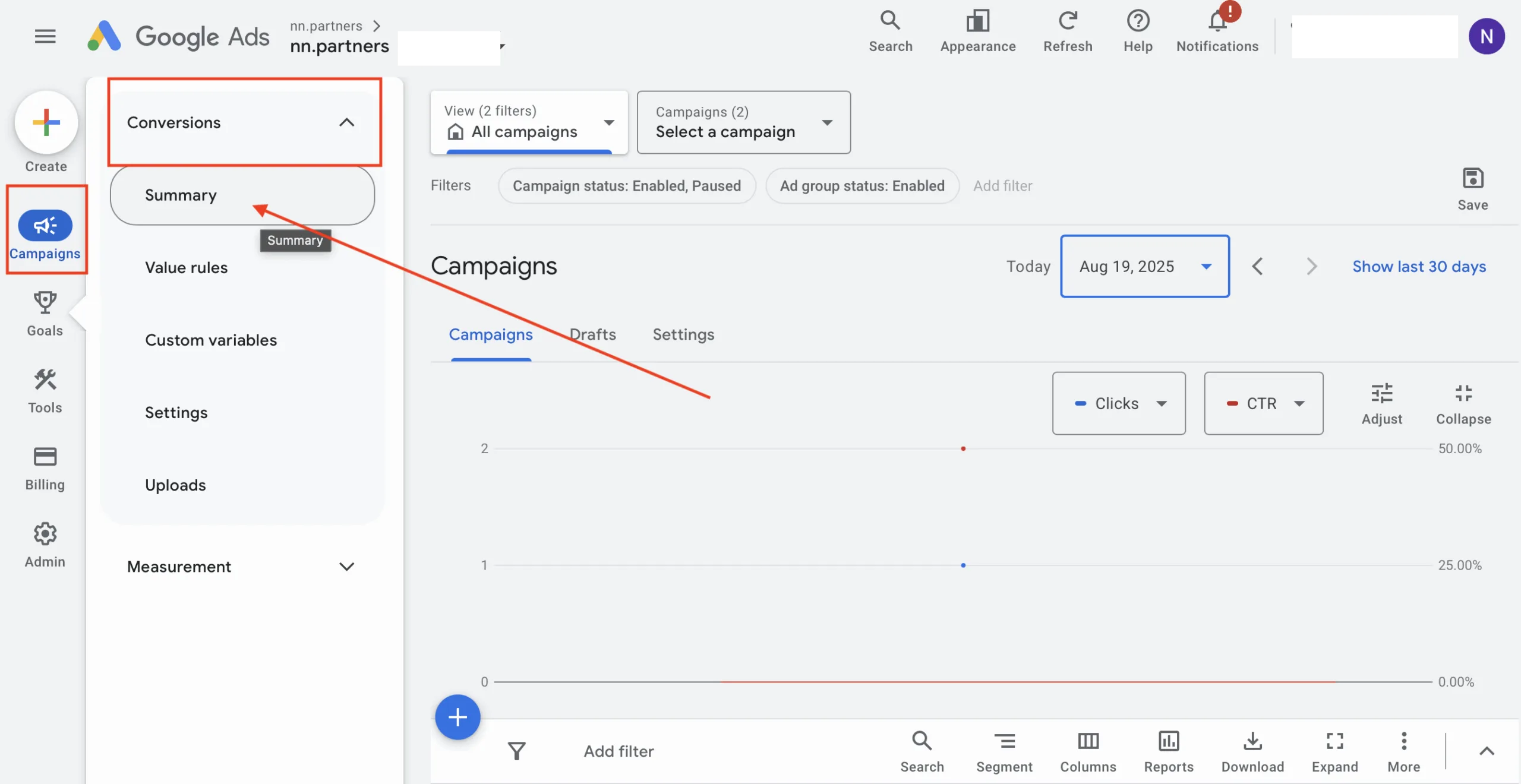
google ads conversion tracking
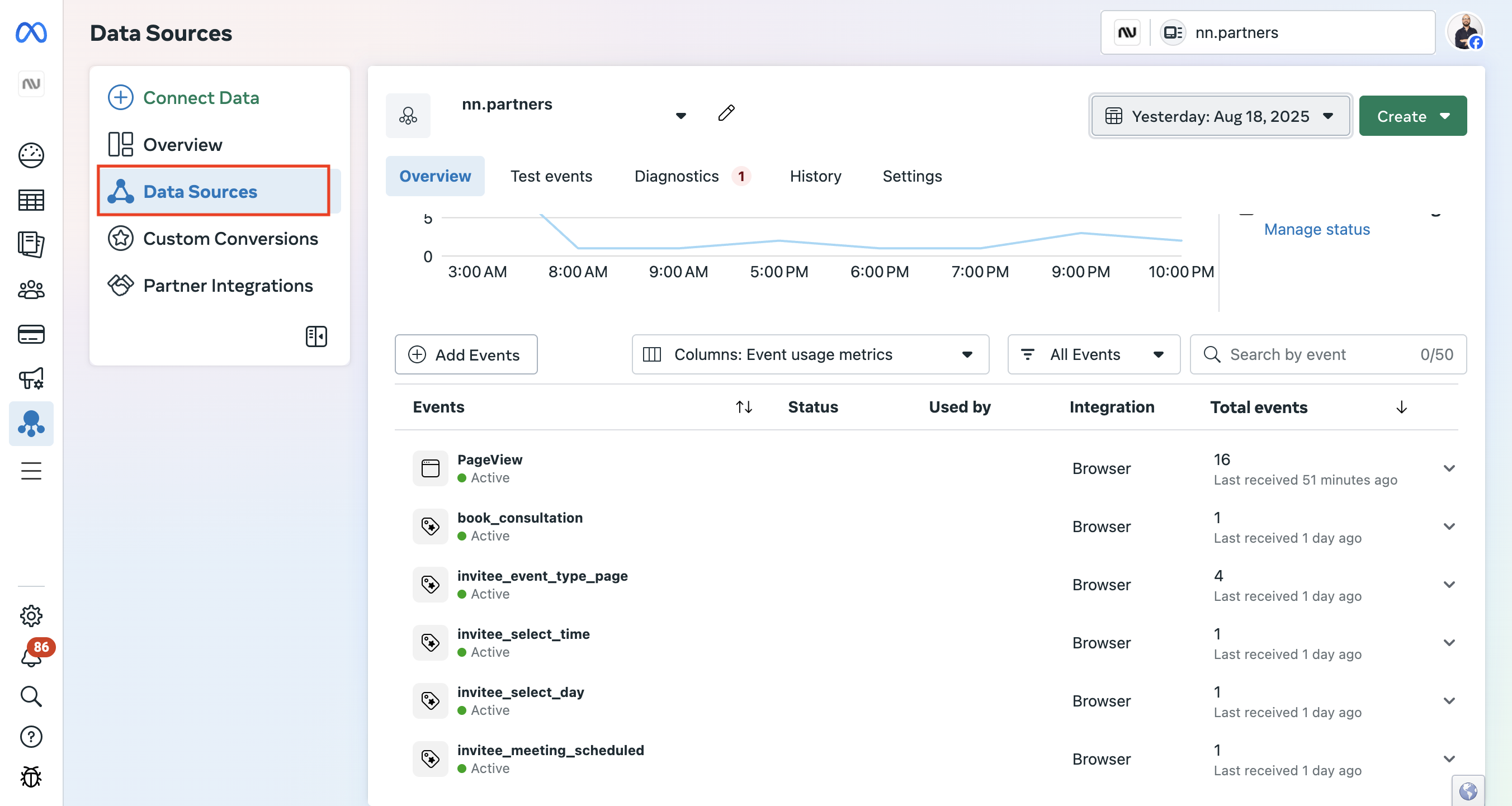
Facebook ads conversion tracking

If the numbers for your most important (eg “purchase”) look weird or don’t match your real sales, fix it fast! This is key because if the platforms don’t know what’s a win, they can’t help you find more winners.

How to do it:

  • Put a little code (called a pixel) each platforms provides on your website to watch for sign-ups or buys.
  • Use tools like Google Tag Manager to make it easy.
  • If sales happen offline, like over email, add those back in.

Want more help? Check these from our site:

Get this down, and your ads will start working smarter.

Pillar 2: Ad Account Structure—Keep It Simple and Strong

Ad account structure is how you organize your ads inside platforms like Google or Meta. Now, this one’s a bit trickier, but I’ll keep it easy.

The main tip: Work with the ad system’s brain (the algorithm), not against it. That means grouping things together to collect lots of data fast. Here’s how:

  • Group Stuff Up: Put similar keywords, ads, and groups of people in one place. Like, if you’re advertising “nursing certification course,” groups related words in fewer spots. This helps the system learn from your best ad lines.
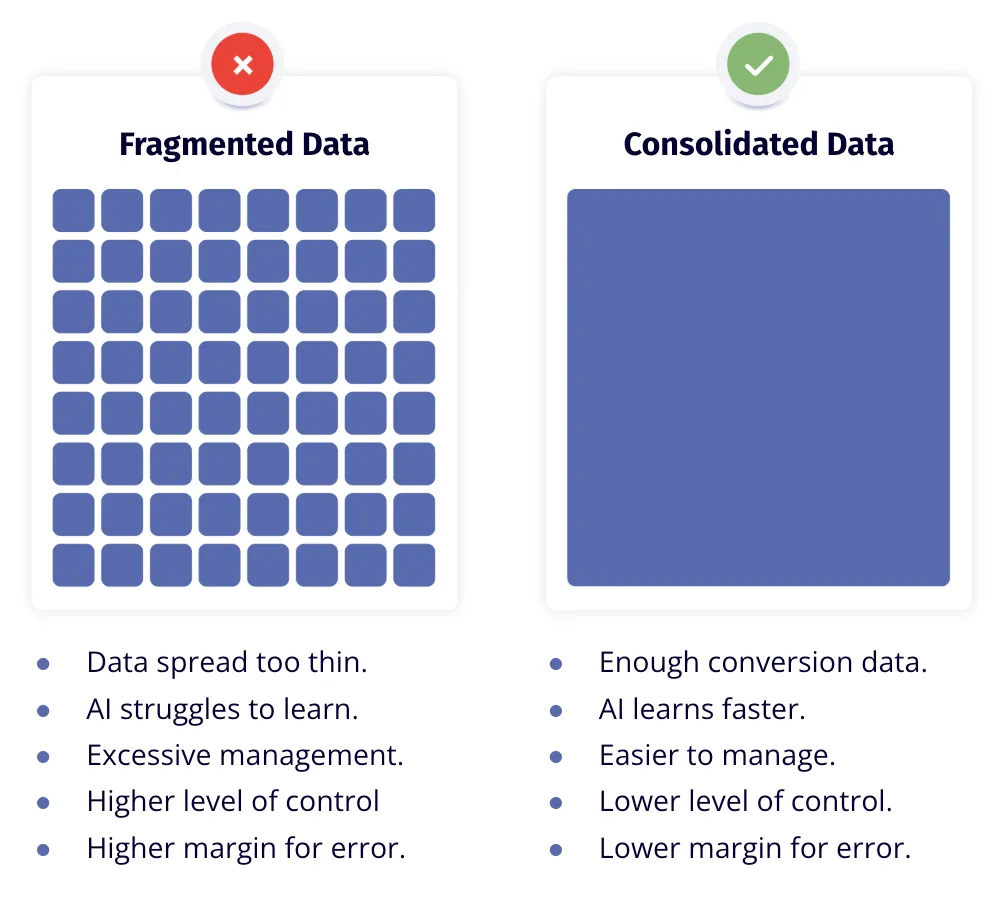
fragmented vs grouped data
image source: Miles McNair
  • Pick the Right Goal: Choose what you want to optimize for, like “sales” if that’s your aim. Don’t just guess—match it to what you really need.
  • Make It Easy: Don’t make a million little campaigns. Use auto-bidding tools to let the AI do the work, and check your dashboard often to cut the bad stuff.

For online schools, try separating by individual course per ad group: nursing, trade, python programming, etc.

This setup lets your ads scale up smoothly.

Dive deeper here:

With good structure, your ads become a reliable machine.

Pillar 3: Communication Strategy—Talk Like a Friend to Win Hearts

These days, it’s easier than ever to write boring ads that say nothing special. But good communication is about connecting with what people dream about—like better jobs, a promotion, or just feeling more confident. For your online school, turn your course perks into real-life wins.

Some ideas:

  • Talk Benefits, Not Just Facts: Don’t say “20 Video Lessons.” Say “Get Licensed in 2 Months or Less!”
  • Match Their Stage: For newbies who don’t know you, keep it fun and helpful, like “Confused About Math? We’ve Got You.” For folks who’ve seen your stuff, add proof: “See Why 1,000 Students Leveled Up Their Skills” leading to a testimonial section, for example.
  • Show not tell: Ad creative that shows—not tells—transformation

This turns visitors into students by solving their problems—like feeling stuck in a job. It’s the last pillar, making sure your ads don’t just show up but actually sell.

For tips, check:

Do this, and people will love your ads.

Wrapping Up: Make Your Ads Rock for Good

Running PPC for your online school doesn’t have to be hard or scary. With conversion tracking, ad structure, and smart talking—our 3-Pillar Approach at nn.partners—you’ll get ads that bring in students, save time, and make more cash. No more guessing; just real growth you can see in the ads and bank account.

Want to check your ads or level up? Hit us up at nn.partners for a free chat. Let’s make your school shine!
Nik Vdovenko founder at nn.partners

Nik Vdovenko

Hi, I’m Nik Vdovenko—founder and CEO at nn.partners. I’m on a mission to match great businesses with great marketing and analytics. I work with an awesome, globally-distributed team from my base in Portugal, and together, we focus on making sure every dollar you spend on Google, Meta, and Microsoft ads drives more sales and profit for your business. Follow me for industry insights, practical guides, and proven strategies to help you grow your business, save time, and get a lasting competitive edge in the digital marketplace.

You might be interested

Running PPC for Online Schools FAQ

Running PPC for an online school can feel overwhelming. There are settings, metrics, platforms, and advice coming from every direction. And after working with countless school owners, one thing has become very clear: most of the confusion comes from not knowing which questions actually matter.

This FAQ is here to cut through the noise.

No jargon. No fluff. Just the essential answers you need to understand how PPC really works for online education, why certain strategies perform better than others, and how to keep your ad budget focused on what actually drives enrollments.

PPC for online schools means paying platforms like Google and Meta to place your school in front of potential students at the exact moment they’re searching, scrolling, or exploring. In theory, it sounds simple. In practice, consistency is the hardest part.

Why? Because most schools run PPC without the three things the algorithms rely on: accurate tracking, a clean account structure, and messaging that matches student motivation. When these pieces are missing, the platforms don’t know what “success” looks like, so performance swings wildly from week to week.

Online learning journeys are also longer than typical e-commerce purchases. Students research, compare, hesitate, talk to family, request info, then enroll. If your tracking and structure don’t follow that journey, your PPC results will feel random even if the demand is strong.

Real Results: One online nursing school we work with went from unpredictable, “good one month, terrible the next” performance to their most stable year on record by fixing exactly these three things. The same ad budget produced nearly double the enrollments within a quarter.

Takeaway: PPC only becomes consistent when your data, structure, and messaging work together. Without that foundation, even great offers will feel like guesswork.

You’ll know your conversion tracking is dialed in when the numbers inside your ad platforms match the real-world outcomes you see in your CRM or enrollment system. If Google Ads says you got 22 enrollments last week, but your internal system shows 7, something is off. Same if your most important events (like purchases or qualified leads) are missing, duplicated, or showing strange spikes.

A quick check: open the “Conversions” section in Google Ads or Meta Events Manager and look specifically at the events that matter most for your school. If the data feels inconsistent, unfamiliar, or unreliable, your tracking isn’t working as it should. Proper tracking should feel boring: stable, predictable, and accurate.

Real Results: One California school came to us thinking their ads “stopped working.” The issue wasn’t performance: it was broken tracking. Once we fixed the setup, Google finally understood which leads turned into actual students, and the algorithm doubled their qualified leads within weeks.

Takeaway: If your conversion numbers don’t clearly reflect actual enrollments, your tracking isn’t correct. Fix that first. Everything else in PPC depends on it.

Track the actions that reflect real progress toward enrollment. For most online schools, the core conversions fall into three tiers:

  • Top of funnel: Leads, info requests, quiz completions, brochure downloads.

  • Mid-funnel: Free trials, booked calls, application starts, qualification events in your CRM.

  • Bottom of funnel: Paid enrollments, first payment, recurring payments if relevant.

If an event doesn’t move someone meaningfully closer to becoming a student, it doesn’t belong in your optimization setup. The key is to measure the entire journey and prioritize the conversions that prove real intent.

Real Results: We helped a US-based online school rebuild their conversion setup from “leads” and “sales” into a full funnel that included trial signups and paid enrollments. Once Google Ads could optimize for real outcomes, their cost per enrollment dropped by 30% percent within 3 months.

Takeaway: Track every step, but optimize for the steps that impact revenue. Your ad platforms need to understand what a high-value student looks like so they can go find more.

Google Ads and Meta Ads are the two most effective PPC channels for online schools, and the key difference between them comes down to how people get information.

Google platform is active search.

Prospective students type specific words: “HVAC certification online,” “nursing CEUs,” “best real estate school.” They are intentionally looking for a solution, which makes Google the strongest channel for capturing high-intent leads and driving enrollments.

Meta platform is passive discovery.

People aren’t typing anything. They’re scrolling and being exposed to new ideas, aspirations, and opportunities they weren’t explicitly looking for. Meta is powerful for creating awareness, shaping interest, and selling in the middle and at the top of the marketing funnel.

Used together, the platforms complement each other: Meta creates and converts demand, and Google search catches it when users switch from curiosity to action.

Takeaway: Google works when someone knows what they want. Meta works when someone needs to realize what they want. The strongest-performing schools use both.

Most online schools start seeing meaningful improvements within 2 to 10 weeks, depending on what was fixed and how much traffic the account gets.

Here’s the breakdown:

  • Fixing tracking delivers the fastest lift. Once Google or Meta finally understand what a real enrollment looks like, the algorithm begins optimizing correctly. Many schools see stability and lower CAC within the first month.
  • Cleaning up account structure requires a bit more patience. The system needs time to relearn, reallocate spend, and gather fresh signals. Expect 2 to 4 weeks before things start to be more predictable.
  • Upgrading creative and messaging can move the needle immediately, but the strongest and most stable gains typically build over 2 to 12 weeks, once audiences are collected, warmed up, and remarketing cycles pick up momentum.

The pattern is the same across platforms: once the fundamentals are fixed, improvement compounds.

Real Results: One of our California-based online schools implemented all three pillars: proper conversion tracking, structured campaigns, and a revamped communication strategy. Within the first 30 days, CAC dropped noticeably. Over the next 18 months, they went on to hit the best performance year in the school’s history, generating record-breaking revenue and profit with far greater stability and predictability.

Takeaway: With the right foundation in place, PPC doesn’t take months to turn around. In most cases, you’ll see the first signs of improvement within a single learning cycle.