5 Reasons Most Google Ads Audits Miss the Tracking Problem (and What We Check First)

There are usually some things that are not working properly.
But when it’s fixed and when it’s done properly, the second most important thing that drives the lion’s share of results is the ad.
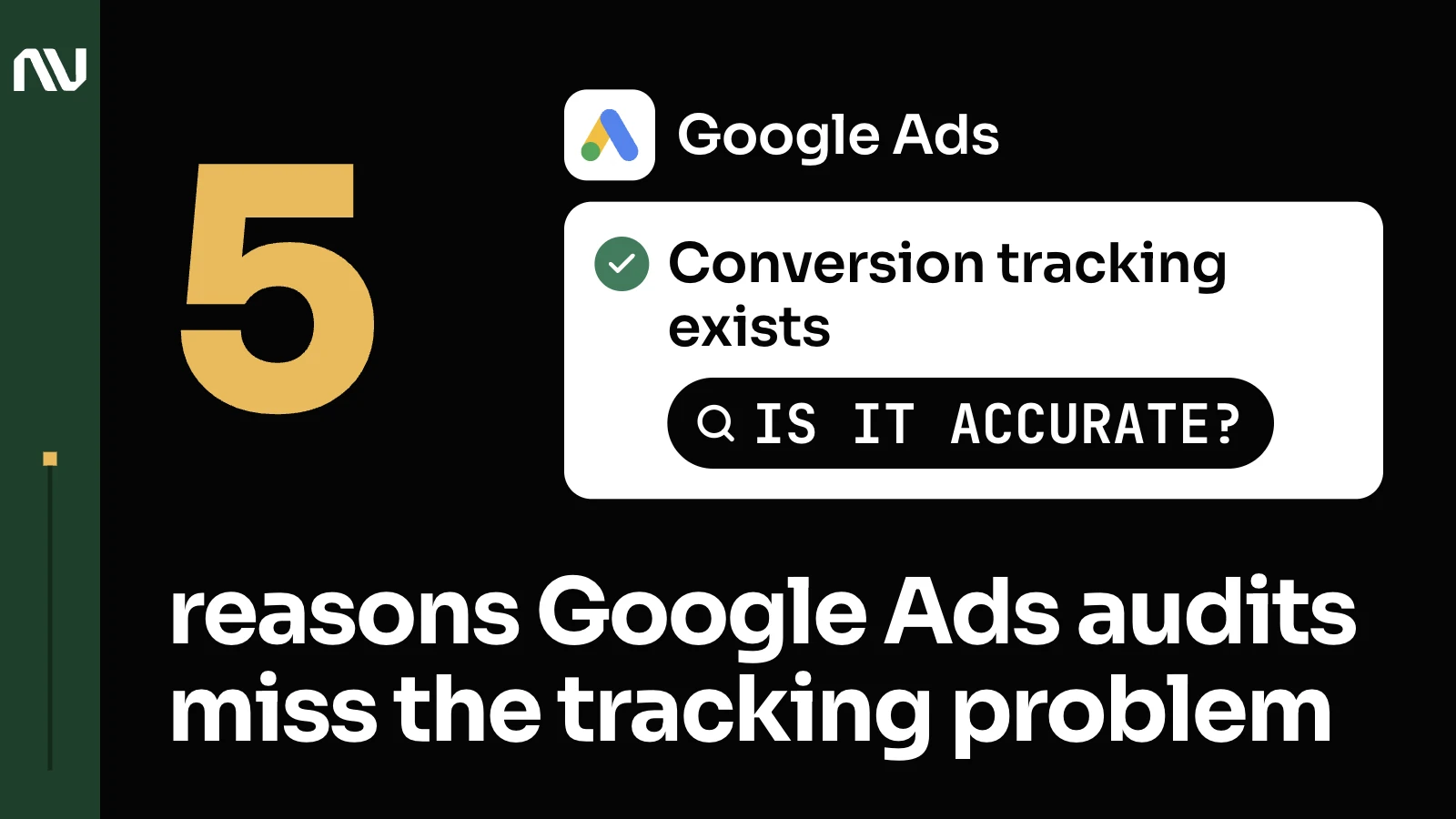
Most Google Ads audits check that conversion tracking exists. The tracking problem they miss is whether what it’s counting is actually true, and that’s the first thing a real audit has to check, before bids, structure, or keywords mean anything.
1. A checklist that confirms tracking exists isn’t the same as one that confirms tracking is accurate.

I think if you are confident that it’s tracking things accurately, that’s a great start because many people track something. But then, after a while, when they look at the CRM, or whatever tracks the purchases, and look at the ads interface, these numbers don’t match, or there is a huge gap between them and they don’t know why. That’s usually becoming an issue.
A mismatched CRM number is one symptom a real check catches, but a conversion action can fire correctly and still be wrong in ways an existence check misses. Google’s own conversion settings list a full panel to get right once the action exists: the count setting, the attribution model, the conversion window.
2. Bid and budget recommendations built on bad conversion data just automate the mistake faster.

We did something here in the extension, a call from ads, a Google hosted conversion. But actually we are optimizing for a different thing. We are optimizing for this set of conversions.
There is no way to adjust the call duration. Whatever we are importing, it is tracking. It is already done.
The easiest way for us to improve quality is to provide the algorithm with the right data, the most accurate right data, so that it knows it’s doing the right thing. Up until yesterday we were instructing it that these calls were of good quality, and it was getting us more of them.
An audit that jumps straight to a bidding recommendation without checking what the algorithm has actually been rewarded for is optimizing on top of the same bad data the account already had. The recommendation just runs on it faster.
3. A structure or targeting problem can be a symptom of a tracking problem wearing a different name.

Wasted spend from bad targeting looks like a structure problem, but a structure diagnosis is only as good as the data underneath it.
We started with the audit and we found a lot of opportunities to make the account work better. With the tracking, which we already addressed. Then with the structure, where certain locations were implied, one city, for example, but they were set up to target other locations, which created waste, structural waste.
4. A platform’s own estimate needs checking against the account’s real numbers before an audit builds anything on it.

But it’s not accurate. That’s the point. And you have the backend information to verify that. It’s not true.
I used this tool for a while, and in order to verify if I can trust it, I used accounts that I have access to, to see what it would tell me.
When you log into Google Ads, there is a keyword planner tool, and there is a range. It’s a very huge difference for the cost of traffic. That depends on many things. So it’s important that we have realistic expectations.
Nobody hands you backend truth for free. You go get it, against numbers you already trust, before you build a recommendation on top of one nobody’s actually verified.
5. Checking tracking first is our own operating default, not something any industry standard requires.

Our approach is based on these 3 pillars, tracking, account structure and communication strategy. The first step for us is always to make sure that the tracking is right. And this is the first pillar in our approach.
Different businesses have different goals, and we collect them, and then we make sure that they are reflected in conversion tracking, in reports, in events, and other things.
On the technical side that needs to be sorted before we even speak about doing anything in the accounts. It’s the same order behind our own 3-pillar method.
In 9 years, I’ve yet to meet a single client whose tracking was perfect. Not one.
Check the numbers before you touch anything else

You don’t need to wait to see if something is broken. You can literally see the dollar amount your account brought back. You can see this in analytics, you can see this in the Google Ads account.
See everything a tracking-first check verifies, or get in touch and we’ll walk through what yours would find.